

Nosferatu (2024) Was A Let-Down
A rambling rationale for watching movies twice.

To pre-empt an article I’ll inevitably write in the future: horror is the best genre of film. I have crafted this hill from a hundred half-baked lectures (often to disinterested friends) and it’s one upon which I fully intend to die.

Horror is a genre that can reach its spectral hand through the screen, crossing the thin threshold that separates us from the realm of fiction, and chill our spine with a single touch. It conjures genuine, tangible fear from something that can never really hurt us.
Comedy is horror’s only rival on this front, invoking laughter in place of screams. But where a ‘bad’ comedy (and there are plenty to go around) becomes something wholly unappealing, a ‘bad’ horror becomes… well, a perfect comedy. Some of the most enjoyable cinematic experiences - from masterpieces like Eight Legged Freaks to fascinating disasters like Birdemic: Shock and Terror - are essentially ‘bad’ horror movies. An awkward, oppressive silence hangs heavy over an audience when a joke doesn’t land, but laughter naturally fills the void where screams should be. Horror has the unique ability to offer us a truly engrossing cinema experience both in success and in failure.
All this goes to say: I love horror movies.
The trouble is, love is irrational. When a horror really connects with me, I’m flushed with adoration as if I have just met the newest ‘love of my life’. I refuse to hear anything that might cloud my idolisation of this newfound lover. Equally, when horror doesn’t meet my expectations I feel betrayed and scorned as if I’d caught my partner in the arms of another.
The latter situation - a mismatch of expectation and reality - is why I left my screening of Nosferatu (2024) with the sinking feeling that this “magnum opus” was actually a bit of a let-down.
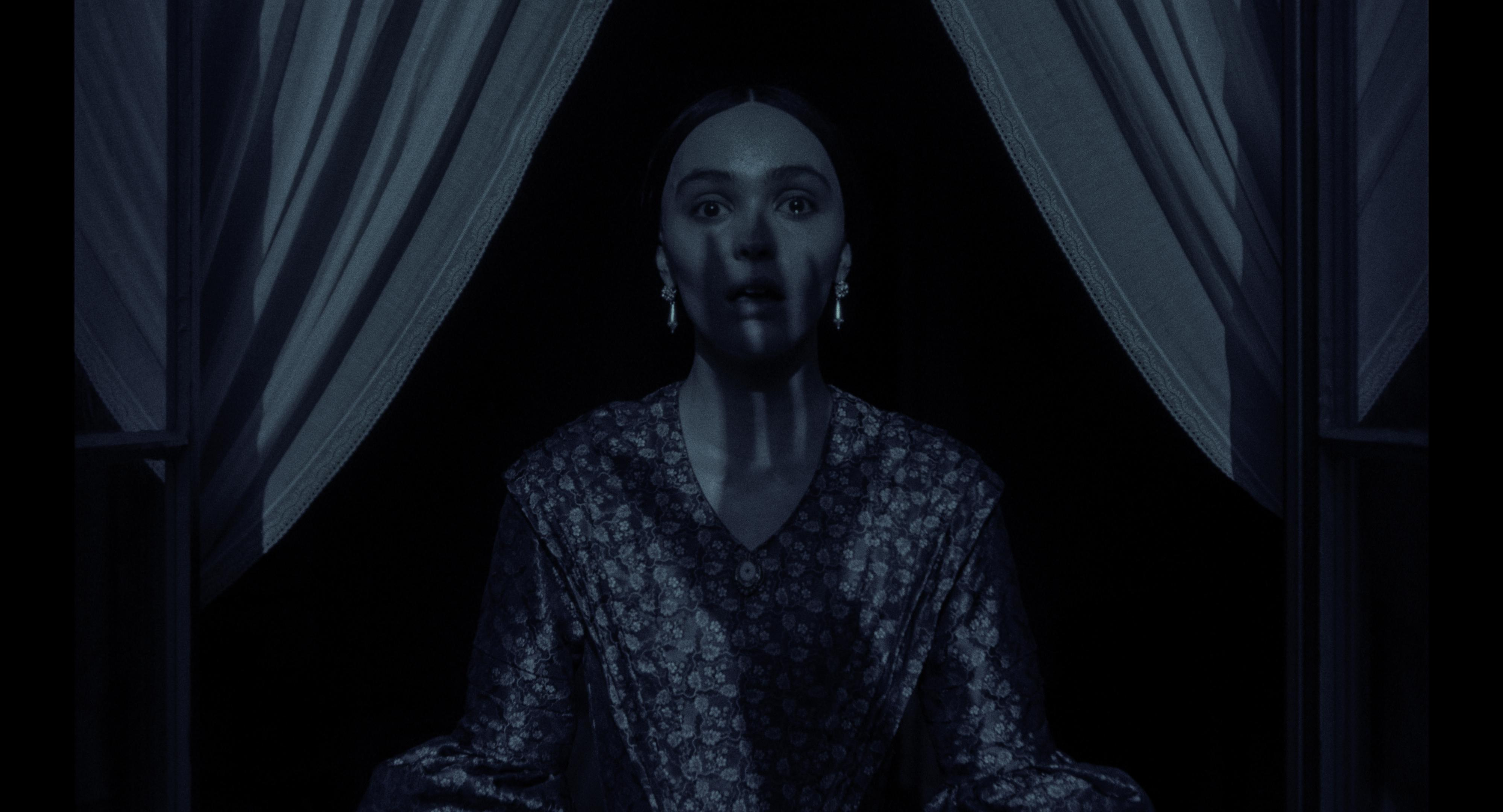
At least 10 friends were waiting for me in the lobby once the movie ended. Most of them were, in an unintentional homage to Lily-Rose Depp’s very physical performance, vibrating with excitement. They had witnessed a movie that had wow-ed them on some fundamental level.
“That’s one of the best movies I’ve ever seen” decreed one of the party. A murmuring sea of agreement followed from the rest.
I stayed silent.
It wasn’t one of the best movies I’d ever seen. In fact, this wasn’t even one of the best Robert Eggers movies I’d seen. I was disappointed. BUT there’s no worse feeling than having someone ‘yuck your yum’, so I kept my opinions to myself as everyone cooed over every facet of the movie.
“The visuals were amazing” I agreed, reluctantly.
I also nodded my head when compliments were showered on the cast, on the lighting, on the makeup and visual design, on the practical effects, and on almost every aspect of its production.
And I wasn’t nodding along insincerely: this was an incredibly well-made movie.
So why was I disappointed?
This question kept bothering me, so I decided to write out a list of pros and cons for the movie:
The Pros Of Nosferatu
Visual Style. The movie is a striking, meticulously-composed work of art. There are plenty of frames I’d happily have framed on my bedroom wall.
Performances. Bill Skarsgård cannot be praised enough for completely disappearing into his role, and the supporting cast throw themselves into even some of the more absurd moments with gusto (shout-out to Simon McBurney for being the perfect little creep).
Lighting. It’s rare to have so much to say about lighting but, even putting aside some incredible use of Count Orlok’s iconic shadow, this movie is spectacular in its use of naked flames and natural dark spaces to create tension and ambience.
Handling of its material. This movie is a wonderful love-letter not only to the original book, but incorporates plentiful visual nods to other interpretations of this iconic story.
The Cons of Nosferatu
The Tone. Compared to Robert Eggers’ other works, this movie is much sillier. It is often melodramatic, regularly leans into the overtly romantic, and at times has the audience laughing instead of screaming.
The Script. This isn’t exactly a transformative interpretation of the vampire story; it sticks to the same story beats save for some additional context and motivation to our female lead and is rarely surprising as a result.
Looking back over this list, I was baffled that I could feel so ambivalent about a movie when I loved so much about its production. What had gone wrong?
The answer that kept looming in the back of my head: I had gone wrong.
I’d been an avid fan of Eggers’ other movies. I’d been so excited for this movie since the first mention of its existence in 2015. And, more than anything, I had been excited for this traditional vampire story to be twisted into a suffocating fever dream like The Lighthouse - one of my favourite films of all time.
Staying objective with this much expectation hanging over you is almost impossible. And I quickly came to realise that the disappointment I had been feeling was not due to a gap between Eggers’ vision and its execution, but a gap between my vision and Eggers’.
See, Nosferatu is another Robert Eggers movie… but it isn’t another The Lighthouse. It leans into its literary roots to become something more romantic, more overtly fictional, and altogether more Gothic than any of his previous movies. And in hindsight this really was the only thing I could find to complain about… because it didn’t match my expectation.
Whether reviewers should be objective or subjective has been discussed by much more accomplished critics than me. The overall consensus seems to be: we must be aware of our bias but attempt, where possible, to present some kind of objective truth about the movie presented to us on screen.
My personal approach is to start by being as impartial as possible: “from a pure filmmaking perspective how well-made was this movie?” I try to consider lighting, scripting, cinematography, sound design, performances, and how all of this enables the director/auteur to execute their vision.
Only after considering all of this will I then allow my personal bias (feeling) to sway my final score by a few points in either direction.
Some examples:
The Room is a 1/10 movie in terms of its production, but due to my personal enjoyment I’ve rated it a 3/10.
Citizen Kane is an incredible feat of production, easily a 9/10. But I really didn’t get anything personally from the story, so I’ve rated it an 8/10.
In the case of Nosferatu, however, I was so wrapped up in my own expectations that I have left myself unable to assess how well Eggers’ executed his vision. He described, in an interview with AnOther Magazine, how he wanted to “create the […] atmosphere of the Universal horror movies in a more grounded, realistic way and make the monsters believable”.
Did he achieve this? Was Nosferatu a ‘good’ movie?
I’ll have to tell you after I’ve seen it for a second time… and maybe pulled my head out my ass a little bit.
Cannot wait to see what you think after watching it a second time!